Why Are Hibiscus Flowers Offered to Goddess Kali?
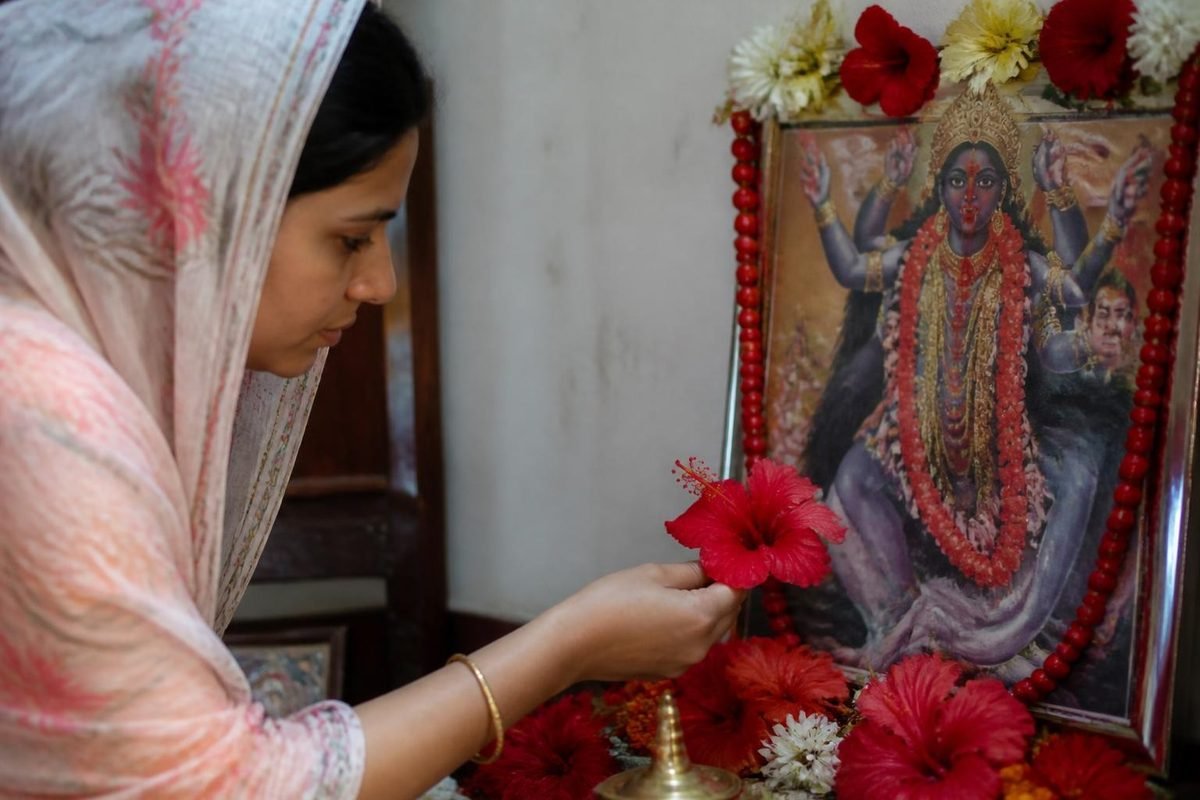
Red hibiscus flowers are offered to Goddess Kali because their deep color is associated with her fierce power and the blood often depicted in her imagery. The flower is also a familiar sign of devotion in many Hindu worship traditions, especially in Bengal.
What the red flower represents
Kali is often shown with a protruding red tongue and imagery that reminds worshippers of death, destruction and the limits of worldly life. The red hibiscus echoes that vivid color. For many devotees, it is a fitting offering to a goddess who confronts forces that people may find frightening.
Red can also suggest energy, strength and life. These meanings sit alongside Kali's role as a powerful mother and protector. The flower does not have one fixed meaning for every devotee, but its color makes the connection easy to see.
Hibiscus is only one part of Kali worship. Images, songs, prayers, lamps and food offerings can also be important, depending on the place and the occasion.
Why hibiscus is used
The red hibiscus is a conspicuous flower, with broad petals and a central column of stamens. It grows in many parts of India and is used in Hindu worship. Its bright, open bloom makes it easy to place before an image or statue of the goddess.
Traditions vary between households and temples. Some devotees have a particular preference for red hibiscus, while others use flowers that are available locally or follow the guidance of a temple priest. A flower's meaning comes from the worship around it, not simply from its shape or color.
How to offer a hibiscus
If you are making a simple offering at home, keep it clean and respectful. These steps are a starting point rather than a rule for every tradition.
- Choose a fresh red hibiscus. Check the petals and remove any damaged parts.
- Wash your hands and make sure the place of worship is clean.
- Place the flower before the image or statue of Kali, or follow the practice used in your household.
- Offer a prayer or sit quietly for a moment. You can use words you know from your tradition.
- Remove the flower once it has wilted and dispose of it according to your household or temple custom.
At a temple, ask the priest or an attendant where flowers should be placed. Some temples have their own procedures for offerings, and visitors may not place items directly on the shrine.
If red hibiscus is not available
Do not assume that a substitute will be accepted in every setting. At a temple, check before bringing another flower. At home, follow your family's practice if you have one. A prayer without a flower may be appropriate, too.
The red hibiscus is valued because it connects a visible, everyday flower with devotion to Kali and her powerful imagery. The care behind the offering matters more than making it elaborate.
On the same subject: how to order flowers online